วันจันทร์ที่ 2 มีนาคม พ.ศ. 2558

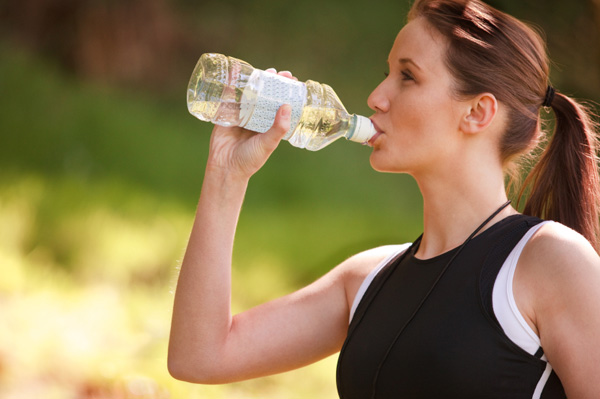
Do I really need to drink eight glasses of water a day?

As you grew up until now I bet you must have heard plenty of advice for being healthy; exercising, eating good food or sleeping well etc., But among those suggestions there must be one solid belief stuck in your head. “If you want to be healthy you need to drink 8 glasses (2 liters) of water daily.” This recommendation is widely believed and people look for the scientific evidence. Is reaching eight glasses per day crucial to good health? Is drinking less water affect to physical health? How much water do you really need? You will find the answer quite soon.


To be clear, the definition of ”healthy” in my meaning is the ability to run, swim, talk or do your daily life activities.


But before we go to the experimental part with scientific evidence, I would like to show you some evidence from my daily life.  I have got a friend who is so obsessed in playing sport. So I asked her what if she drinks 8 glasses of water a day or not. Then she said “It’s really hard to happen. My maximum is about 4 or 5 cups.” After I collected the information from people around me, I have got my hypothesis. I think drinking 2 liters of water a day is not a key to be healthy.


I did hold the experiment to disproof this myth by using 3 female volunteers and 3 male volunteers. In the first week, they were allowed to drink only 5 glasses per day. After that, in the last two week, they were ordered to reach 8 glasses a day. During the experiment I would ask about the volunteers’ feeling, their thirstiness and also the ability to do their daily life activities. In addition, I recorded their time in 50 meters running when they drank 5 and 8 glasses of water. Then I collected the data and compared between the 5 glasses intake and the 8 glasses intake conditions.


The result shows that there is no significant different outcome between the two conditions but sometimes the volunteers wanted some extra water after the exercise. However, to confirm my experiment I do more research about it by searching for the scientific journal (American Journal of Physiological - Regulatory, Integrative and Comparative Physiology, November 2002, Drink at least eight glasses of water a day. Really? Is there scientific evidence for "8x8"? Valtin H). Therefore, it credible that it is not necessary to reach 8 glasses daily.


By the way, “How much water do you really need?” I can’t give you the specific number because there is no universal requirement for water intake. It depends on your age, gender, body size and others. Furthermore, in the diet like fruits contain a lot of water. So if your diet is full of water-rich fruits, you may not need as much liquid water as you think.


Another suggestion from me is to drink when you get thirsty because it is sign from your body that you are dehydrated. So let your thirst be your guide and adjust your fluid intake depending on your lifestyle and environment. Don’t drink too much or too less water. Drink as much as you want!

Reference:  
American Journal of Physiological - Regulatory, Integrative and Comparative Physiology, November 2002, Drink at least eight glasses of water a day. Really? Is there scientific evidence for "8x8"? Valtin H

Written by Wanarat Chiaowareesajja M.6 No.21 55010022 

Why 'Tears' is called the Medical Fluid? not symbol of sorrow

Do you know ‘Tears’? They are the pure drop of water that flow down the surface of your eyes, across your face and smear your mascara. They usually happen when you have sadness or pain.

Some people say they never lose their tears since they were born. Even though you sleep, tears are built all the time.  

Actually, you have started crying when you were born. Optical professionals explain that the umbilical cord is the contactable relationship between a baby and his mom. The purpose of crying is like the umbilical cord—a baby wants to send the signal of care to his mom. He wants his mom to take care of him in physical and mental way.

However, he grows up and can use other ways to talk with his parents. This let us feel confused “Why tears still exist?”. 


So we will start to study about tears from…

1. The definition of tears:
Tears are salty fluid which contains full of protein, water, mucus and oil released from the lacrimal gland in your eyes.

2. Types of tears:
  • Basal tears: the normal tears in our eyes.The human body produces an average of 5 to 10 ounces of basal tears per day. They drain through the nasal cavity because they contact together. That can answer the question “Why people have the runny nose after they cried?”.


Reflex tears: the protector in human body. They can protect the human eyes from harsh irritants such as smoke, onions or the strong dusty wind.                                                                                                         To accomplish this act, the sensory nerves contact to brain stem. Then, the brain send hormone which can control eyes reflex and causes the eyes to produce tears for ridding the irritants.                                                                                                                 
  • Emotional tears : the complex tears. It is controlled by Cerebrum, a part of brain. Emotional tears is our main focus.                                                                                                                                                                                     The phrase “Having a good cry can help our health” shows that many people believe crying can actually make you feel physically and emotionally better.                                                                                                                       It is already proved by collecting data of volunteers approximately 85% women and 73% men told that they are getting better after they cried. Some scientists agree with this theory, asserting the chemicals that built up in the body during times of increasing stress. These people believe that crying is the body’s way to decrease and get rid of toxins and waste products. 


     How different between basal tears, reflex tears and emotional tears?
The researchers studied and collected the components data of three types of tears (after peeling an onion, watching sad movie and facing sorrow event). When researchers analyzed the content of the tears, they found the different concentration of components such as water, protein and other chemical components. 

Reflex tears found 98% water while emotional tears mostly found chemical substances [Source: The Daily Journal]. Adrenocorticotropic hormones (increasing stress level hormone) and leucine-enkephalin (endorphin that reduces pain and work to improve mood) are found in emotional tears. It shows that tears can decrease toxics and waste in the body.

"Tears of Laughing"
                © 2013 Rose-Lynn Fisher

"Onion Tears"
© 2013 Rose-Lynn Fisher


  "Tears of Grief"
© 2013 Rose-Lynn Fisher


"Basal Tears"
© 2013 Rose-Lynn Fisher
          In Japan, some people have taken the notation of “a good cry” to restore their health by organizing crying club where they watch sad movies or do something that can make them cried because they believe ‘Tears’ is the medical fluid.  
     
     writer : Panyada Thowcharoen 55010016 

     References:
1.  William Frey, Crying: The Mystery of Tears, Winston Press, Texas, 1977.
2.  Charles C. Kennedy, ‘Tears: Medical Research Helps Explain Why You Cry’, Mayo Clinic Health Letter, February 1992, pp. 4, 5.


What happen when you mix coca cola with milk??

Now, there are lots of videos about coca cola fantastic experiments.It’s interesting to find out how coca cola reacts to other elements such as putting Mentos on coca cola, boiling it up, or cleaning toilet with it.
    And here’s another coca cola experiment which can leave you stunned and you might reconsider drinking any soft drinks. Let’s start the experiment now!! 


First, in this experiment, we need only two things; coca cola and milk


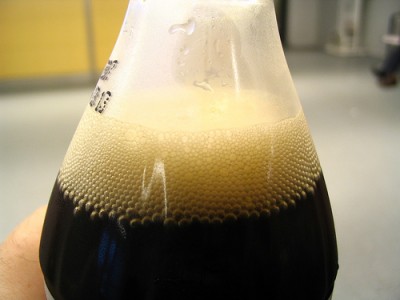
Then, we pour milk into a bottle of coca cola carefully. Make sure that the liquid doesn’t overflow the bottle. Now, you can see white floating bubbles on the top of the bottle.


After that, shake the bottle to mix coca cola with milk and see what happen to the solution. Let it sit for few hours.

An hour ago, Oh!! The whole elemental composition of the fizzy drink changes very apparently!


6 hours later, here come the solution that you may change your minds consuming coca cola because it represents how the drink might react with the calcium in your bones since soft drinks have a capacity to give you serious conditions like osteoporosis!

      
     Osteoporosis is a progressive bone disease that is characterized by a decrease in bone mass and density which can lead to an increased risk of fracture. It causes bones to become weak and brittle — so brittle that a fall or even mild stresses like bending over or coughing can cause a fracture.


You might wonder how these two components reacts together to become some kinds of terrible drinks. It’s the reaction of Phosphoric Acid contained in coca cola to the milk. The below equation represents the reaction in this experiment.

3Ca + 2H3PO4 --> Ca3(PO4)2 + 3H2

Phosphoric Acid molecules attach to the calcium to become calcium phosphates which have more density and separate out. Other components in coca cola and milk now float on the top of bottle. The bubbles you have seen are hydrogen gas. The solid matter is basically milk that has been curdled by the addition of the more acidic soda.

Both coca cola and milk are acidic but coca cola is more acidic. Generally, coca cola has a pH around 2.5-4.5 because of the Phosphoric Acid content. Milk has a normal pH of around 6.7

There are some studies to suggest that high Phosphoric Acid in soft drinks can increase more chance for people to become Osteoporosis if he or she isn't getting enough Calcium in their diet. After watching this experiment, do you reconsider drinking any soft drinks??


Reference:
http://thehigherlearning.com/2014/05/26/when-you-mix-milk-into-coke-and-let-it-sit-for-a-while-strange-things-start-to-happen-video/


by Chatchai Chirapornchai No.5

Can 4 benefits of coke really usable?


Can 4 benefits of coke really usable?


If you think about coke, you will imagine a beverage which makes you feel fresh but that is not the only benefit of coke, it can help you to solve your daily problems.
           
First of all, you can use coke to clean your bathroom instead of bathroom cleaner. To prove this hypothesis, just pour coke on bathroom floor or flush toilet for 30 minutes – 1 hour, then clean. Result of this experiment the bathroom floor didn’t turn to be clean again because the pH of coke (3.19 strong acids) which isn’t strong enough and after wiping coke out, there is black stain left on the floor. 

Second, you can use coke to clean the old coin. To prove this hypothesis, just soak the coins in coke for 30 minutes and then clean the coins with water. Finally, the coins become new! Again. From my experiment I soak Thai coins in coke. As a result my coins were clean and white again, I think that acidic property of coke can erode the dirt on coins.
          

Third, you can use coke to get rid of rust from home equipment .Proving this hypothesis, just rub the rusty equipment with coke until the rust disappeared. From my experiment, I pour coke on to the rusty equipment and scrub on the rust and then the rust was disappearing because the chemical reaction between phosphoric acid in coke and ferrous oxide can dissolve the rust on equipment. Although efficiency of coke is less than the real rust remover but it is safer for environment.
           
For the last one, you can use coke to remove grease stains from your clothes. It is difficult to clean grease stains, just wash your clothes with a can of coke. From my experiment I dropped the oil on my cloth and then I mixed coke with detergent to wash out the oil. Finally, you will get the clean cloth, because phosphoric acid and carbonic acid can react with grease stains and help you wash your clothes easier.
 
To conclude, 4 hypotheses about the benefits of coke showed that Coke can be useful very well but there is 1 hypothesis that’s not true. Finally, remember that don’t judge anything on its face, it might seem to be useless for first time but if you learn more about its benefit, anything can be useful in your life. 

References:
Cool stuff.  (2014, 25 December).  17 ข้อเท็จจริงเกี่ยวกับ “โค้ก” ที่คุณเองยังไม่รู้.www.kiitdoo.com.
Petmaya.com.  (2014, 25 December).  16 ประโยชน์ของโค้ก . 
lifecheating.com (2014, 17 July).  19 Amazing Life Cheats For Coca-Cola


Akkrawin Sukjaiworawate No.29  55010030

วันอาทิตย์ที่ 1 มีนาคม พ.ศ. 2558

Does tapping a soda can prevent it from foaming over?


Many people believe that tapping on a shaken soda can could prevent it from foaming. However, others do not agree with this. So I will experiment this myth and figure out whether tapping a soda can is useful to avoid a soda explosion.

First of all, let’s see the science in soda can. According to physics law, the amount of dissolved carbon dioxide in the liquid depends on the carbon dioxide’s partial pressure inside the can. Compressed with a large amount of carbon dioxide, a soda can has carbon dioxide partial pressure significantly higher than in normal air. Consequently, the liquid inside the can contains high dissolved carbon dioxide level. Next, when a soda can is opened, the pressure of carbon dioxide inside the can drops. Regarding the Ideal gas law, carbon dioxide gas inside the liquid has more volume and rises to the surface of the solution because its density is lower than liquid. However, some of carbon dioxide is trapped by the liquid on the very top of the can. And this gas creates a million bubbles inside the can.


When a can is shaken, the dissolve carbon dioxide is forced to become a gas again. So, many bubbles are created on the solution’s surface. When the can is opened, this bubble layer will block the gas from escaping the liquid, and form more bubble inside the can. Eventually, there are too much bubbles, and the soda can starts foaming over. 
Many people believe that tapping on soda can could break the bubble layer down or, at least, make it thinner. As a result, dissolved carbon dioxide can easily escape the solution, not causing foaming over. However, some people argue that tapping soda can does not knock off enough bubbles to avoid foaming over. Moreover, tapping, perhaps, caused more bubble on the solution because when you tap, you are adding more energy to the system. Thus, I would like to do an experiment to find a conclusion for this myth.

Here is my methodology. I used two unopened 325ml Coca-Cola can. Both cans were shaken 10 times within 3 seconds. Next, the first can was tapped 10 times on the side. Then, both cans were opened at the same time. The reason for opening both cans at the same time (not open the second can immediately after being shaken) is to avoid error from time factor. The duration between shaking and opening could have affected the experiment. And lastly, the data was collected by investigating whether the Coca-Cola can is foaming over or not, if so, how much foam coming out.


Before
After 
For the result, I found that both cans were foaming over after being opened. The amount of foam on the top of each can was nearly the same. So this experiment shows that tapping on a can after being shaken does not prevent it from foaming over. Perhaps tapping could reduce the amount of bubbles coming out. It’s obvious that this amount is not big enough to create any significant change. In conclusion, this myth is busted.


References:
1. Snopes. Tapping the side of soda can will prevent its contents from foaming over. Available at: URL: http://www.snopes.com/science/sodacan.asp. Accessed February 13, 2015.
2. Livescience. Does tapping soda can prevent it from foaming over. Available at: URL:         http://www.livescience.com/34159-tap-soda-can-carbonation.html. Accessed February 13, 2015

Written by Thana Pongcharoenyong 11